
Skip to content
Self OS™ is education and self-reflection, not therapy or medical care. In crisis in the US, call or text 988. Elsewhere, call your local emergency number.
Mosaic Within, Self OS
Sign inFree Snapshot
Mosaic Within

Why I built Self OS™.

The story behind Self OS™, the professional background underneath it, and the Founder’s Statement that everything else here, the Snapshot, the Journey, the modules, the tribes, is derived from. In the words of the person who built it.
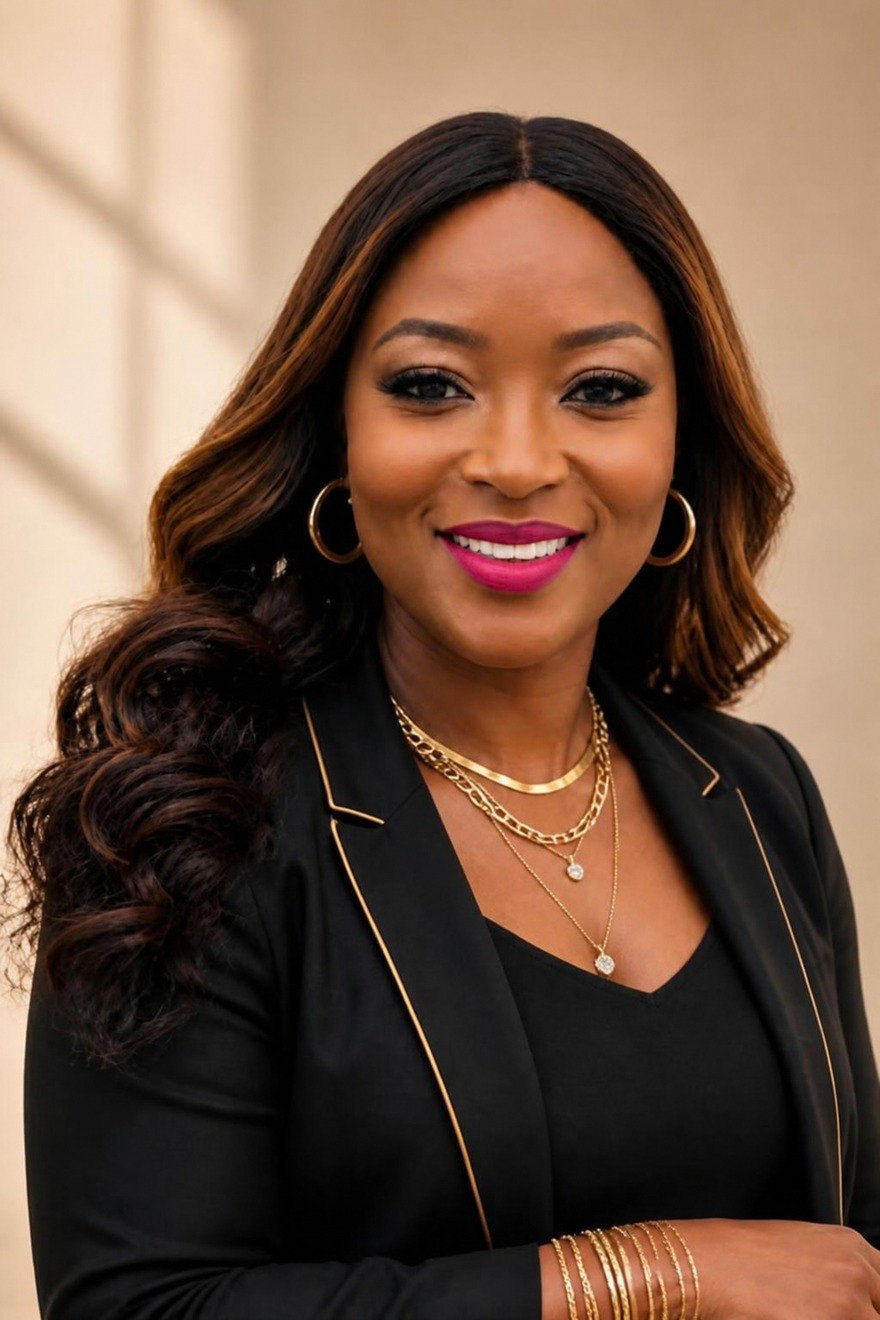
Elizabeth Macshadiya, MSN, APRN, PMHNP-BC · Founder and guide
In healthcare since 2010Board-certified psychiatric mental health nurse practitionerFounder, Mosaic Within™Creator of Self OS™
Elizabeth Macshadiya

Elizabeth Macshadiya, MSN, APRN, PMHNP-BC

I spent years listening to people’s stories. Eventually, I began to notice the patterns underneath them.

I have always been interested in people: not only in what happened to them, but in how they made sense of what happened.

I became a registered nurse in 2010 and later a board-certified psychiatric mental health nurse practitioner. Over the years, my work has taken me through emergency rooms, inpatient and outpatient settings, intellectual and developmental disability care, corrections, psychiatric emergency care, and eventually private psychiatric practice.

I have worked with children, adolescents, and adults from different backgrounds, cultures, families, and stages of life.

And I have listened to thousands of stories.

The details were always different.

The patterns often weren’t.

Again and again, I met intelligent, capable, thoughtful people who could explain exactly what they should do and still couldn’t understand why they kept doing something else.

  • People who accomplished extraordinary things but still wondered whether they were good enough.
  • People who became indispensable to everyone around them and quietly lost track of themselves.
  • People who controlled because uncertainty felt unbearable.
  • People who kept moving because slowing down meant feeling.
  • People who disappeared, shut down, overthought, overperformed, overgave, accommodated, achieved, protected, pursued, or withdrew.

Their lives were different. Their pain was different. Their stories belonged entirely to them.

But underneath those stories, I kept recognizing familiar human patterns.

And I often found myself wondering: how do we make sense of people’s suffering?

Not only, what symptoms do they have? But:

  • Why this pattern?
  • Why does this particular situation affect this person so deeply?
  • What happened that made this response make sense?
  • What is this person actually trying to protect?
  • What do they need that they may never have learned how to name?
  • And who might they become if the strategies that once protected them no longer had to run their lives?

Those questions stayed with me.

And some of those questions were personal.

My interest in this work did not develop only from sitting on the clinician’s side of the room. Parts of it came from my own life.

  • I know something about trauma.
  • I know what it is like to grow up poor and become determined to create a different life.
  • I know what it is like to live between cultures and sometimes wonder where you fully belong.
  • I know the identity of being the strong one, the person who figures it out, carries the responsibility, keeps moving, and rarely gets permission to fall apart.
  • I know what it is like to accomplish something meaningful and still hear a voice asking whether you are actually good enough.
  • To experience imposter syndrome even when the evidence says you belong in the room.
  • To discover that achievement can change your circumstances without automatically changing the story you carry about yourself.

And I began to recognize something important: insight and intelligence do not automatically free us from the patterns we developed to survive, belong, achieve, stay safe, or be loved.

Sometimes we understand exactly what we are doing. We just don’t understand why it makes so much sense to some part of us.

That distinction became important to me.

The question changed

After years in mental health, I became less interested in asking only “What’s wrong?” and increasingly interested in asking:

What happened, what did you learn from it, and what did you have to become?

That is a different kind of question. Because a behavior that looks irrational in isolation can make remarkable sense when you understand the story around it.

  • Perfectionism may have had a job.
  • Hyper-independence may have had a job.
  • People-pleasing may have had a job.
  • Achievement may have had a job.
  • Control may have had a job.
  • Withdrawal may have had a job.
  • Being needed may have had a job.

Even the parts of ourselves we eventually become frustrated with may have begun as intelligent responses to something we needed, feared, learned, or survived.

I became fascinated by the space between what happened to us and what we concluded because of it.

  • Between the signal and the story.
  • Between the story and the need.
  • Between the person we learned to be and the person we might choose to become.

That space became the beginning of Self OS.

The idea behind Self OS™

Self OS grew from years of listening, studying, practicing, observing, questioning, and doing my own meaning-making.

It is built around a simple premise: our stories may be unique, but many of the patterns we develop are deeply human.

We learn ways of functioning. We develop assumptions about ourselves, other people, safety, love, achievement, belonging, failure, vulnerability, and worth. We repeat what works.

Eventually, some of those responses become so automatic that they begin to feel like personality: “That’s just who I am.”

But sometimes it isn’t simply who you are.

  • Sometimes it is what you learned.
  • Sometimes it is what worked.
  • Sometimes it is what protected you.
  • Sometimes it is what helped you belong.
  • Sometimes it is what got rewarded.
  • Sometimes it is the version of you that became necessary.

Self OS is an invitation to become curious about that version of yourself rather than simply judging it.

  • To notice your signals.
  • Understand the stories attached to them.
  • Identify the needs underneath them.
  • Recognize the patterns that keep repeating.
  • And decide, with greater intention, what still belongs in the life you are building.

Because understanding where a pattern came from does not require you to keep living from it.

I think of myself as a meaning-maker. My work has taught me that people need more than explanations. They need language for experiences they have struggled to name. They need ways to reconnect pieces of their story that may have felt unrelated. They need space to ask not only what happened to me? but also:

  • What did I make it mean?
  • What did I learn about myself?
  • What did I become because of it?
  • What am I still carrying?
  • What still serves me?
  • What am I ready to choose differently?

That is the work Self OS was created to support.

I believe people have earned the ability to have their stories told, their journeys witnessed, and their narratives reclaimed.

Self OS is my attempt to build a place where that kind of meaning-making can happen deliberately. Not by telling people who they are. But by helping them become more curious about how they became who they are, and who they want to become next.

Elizabeth Macshadiya

Professional background

Elizabeth Macshadiya, MSN, APRN, PMHNP-BC

Founder, Mosaic Within™ · Creator of Self OS™

Elizabeth has worked in healthcare since 2010 and is a board-certified Psychiatric Mental Health Nurse Practitioner. Her nursing and mental health experience has included emergency care, inpatient and outpatient settings, intellectual and developmental disability services, corrections, psychiatric emergency care, and private psychiatric practice.

She earned her Associate of Applied Science in Nursing with honors from San Jacinto College, her Bachelor of Science in Nursing summa cum laude from Texas Tech University Health Sciences Center, and her Master of Science in Nursing with honors from Midwestern State University, where she prepared as a psychiatric mental health nurse practitioner.

She is currently pursuing her Doctor of Nursing Practice at The University of Texas Health Science Center at Houston, with a focus on nursing and executive leadership.

Across her career, Elizabeth’s approach has emphasized listening closely, treating people with dignity and unconditional positive regard, understanding the whole person rather than reducing someone to a diagnosis, and helping people participate actively in understanding their own lives and choices.

Self OS™ draws inspiration from those years of professional experience, continued study, thousands of human conversations, and Elizabeth’s own lived journey.

Self OS™ and Mosaic Within™ provide coaching, education, self-reflection tools, and community experiences. They are not psychotherapy, psychiatric treatment, medical care, or a substitute for professional mental health treatment.

The canonical statement

Founder’s Statement.

Everything else here, the Snapshot, the Journey, the modules, the tribes, is derived from this.

I believe people are not broken.

I believe their stories are often fragmented.

Over time, life leaves its marks: loss, disappointment, trauma, transition, success, failure, love, grief, responsibility, and change. Somewhere along the way, we can lose sight of who we are beneath the roles we play, the expectations placed upon us, and the burdens we carry.

My goal is to help you realize that you are the meaning-maker of your life. I help people understand their stories and reconnect the pieces, so they can become more whole.

I believe every person has a story worth understanding, and has earned the right to have it told, witnessed, and reclaimed.

I believe symptoms are signals. Rather than asking only, “What is wrong?” I am interested in asking:

  • Why is this person’s suffering showing up in this particular way, at this particular time in their life?
  • What is this signal trying to tell us?
  • What happened?
  • Why now?
  • What is underneath this?

And ultimately:

What are you really longing for?

Because beneath the presenting problem there may be another need, a Nested Need.

  • A longing for safety.
  • For freedom.
  • For rest.
  • For hope.
  • For meaning.
  • For connection.
  • For purpose.
  • For acceptance.
  • For belonging.
  • To be seen.
  • To be heard.
  • To be known.
  • To come home to yourself.

I believe healing is not simply about eliminating symptoms or becoming someone else. It can also be about remembering, reclaiming, and integrating the parts of ourselves that have been forgotten, hidden, wounded, silenced, or left behind. It is about making meaning from our experiences without allowing those experiences to dictate the rest of our story.

Our scars do not necessarily diminish us. Like kintsugi, the places where we have been broken, repaired, changed, and remade can become part of the beauty and meaning of the whole.

I believe meaning matters.

I believe connection matters.

I believe being seen and heard matters.

I believe being known matters.

I believe belonging matters.

And I believe we are not meant to do this thing called life alone. We need people. We need witnesses to our journeys. We need places where we can bring our whole selves, warts, scars, contradictions, uncertainty, laughter, grief, hope, and all, and still know that we belong.

I don’t believe growth requires having all the answers. Sometimes it begins with asking better questions.

A better question can uncover a different story.

A different story can reveal meaning.

Meaning can reveal what we truly need.

And understanding what we need can help us choose where we go next.

Becoming more whole is not a destination. We are all becoming.

There are times when we are Seekers, knowing that something is calling us but not yet knowing what.

There are times when we are Wanderers, exploring, experimenting, learning, and trying different paths.

There are times when we become Travelers, choosing a direction and beginning to walk it intentionally.

And eventually, some of us become Flight Guides, people who have traveled enough of our own journey that we are ready to turn around, extend a hand, and help someone else along theirs.

That reflects my own story:

  • I was helped.
  • I healed.
  • I grew.
  • Now I help others.

Contribution is part of becoming whole. Our pain does not have to become our identity, but what we learn through it can become something we offer to another human being.

That is why I created Mosaic Within. Not because I have arrived, or have figured life out, or have all the answers. I know what it means to search for meaning, for purpose, and for your people, and I believe there should be a place where we can do some of that searching together:

  • A place to understand ourselves more deeply and explore the signals appearing in our lives.
  • A place to tell our stories, have them witnessed, and discover our Nested Needs.
  • A place to find meaningful support, and to find our people.
  • And eventually, a place where what we have learned through our own journeys can help someone else through theirs.

People are not broken. Sometimes the pieces of our stories simply need to be reconnected.

That is the work. That is Mosaic Within.

I’m on the journey too.

You can start whenever you’re ready…

Elizabeth Macshadiya

The path

We are all becoming.

Stages, not status tiers. Members name their own stage inside Tribes, and it travels beside their first name. Flight Guide is the one stage Elizabeth names, because it reflects service, not achievement.

01
Seeker

I know something needs to change.

02
Wanderer

I am exploring possibilities.

03
Traveler

I have chosen a direction.

04
Wayfinder

I have learned how to navigate.

05
Flight Guide

I help others find their way.

Begin

Start whenever you’re ready.

The free Self OS Snapshot is fifteen questions and a first look at what runs underneath.

Self OS™ is education and self-reflection, not therapy or medical care. If you are in crisis, call or text 988 now.
Skip to content
Self OS™ is education and self-reflection, not therapy or medical care. In crisis in the US, call or text 988.
Mosaic Within, Self OS
Free Snapshot
Elizabeth Macshadiya
Mosaic Within

Why I built Self OS™.

The story behind Self OS™, the professional background underneath it, and the Founder’s Statement that everything else here, the Snapshot, the Journey, the modules, the tribes, is derived from. In the words of the person who built it.

Elizabeth Macshadiya, MSN, APRN, PMHNP-BC · Founder and guide
In healthcare since 2010Board-certified psychiatric mental health nurse practitionerFounder, Mosaic Within™Creator of Self OS™

Elizabeth Macshadiya, MSN, APRN, PMHNP-BC

I spent years listening to people’s stories. Eventually, I began to notice the patterns underneath them.

I have always been interested in people: not only in what happened to them, but in how they made sense of what happened.

I became a registered nurse in 2010 and later a board-certified psychiatric mental health nurse practitioner. Over the years, my work has taken me through emergency rooms, inpatient and outpatient settings, intellectual and developmental disability care, corrections, psychiatric emergency care, and eventually private psychiatric practice.

I have worked with children, adolescents, and adults from different backgrounds, cultures, families, and stages of life.

And I have listened to thousands of stories.

The details were always different.

The patterns often weren’t.

Again and again, I met intelligent, capable, thoughtful people who could explain exactly what they should do and still couldn’t understand why they kept doing something else.

  • People who accomplished extraordinary things but still wondered whether they were good enough.
  • People who became indispensable to everyone around them and quietly lost track of themselves.
  • People who controlled because uncertainty felt unbearable.
  • People who kept moving because slowing down meant feeling.
  • People who disappeared, shut down, overthought, overperformed, overgave, accommodated, achieved, protected, pursued, or withdrew.

Their lives were different. Their pain was different. Their stories belonged entirely to them.

But underneath those stories, I kept recognizing familiar human patterns.

And I often found myself wondering: how do we make sense of people’s suffering?

Not only, what symptoms do they have? But:

  • Why this pattern?
  • Why does this particular situation affect this person so deeply?
  • What happened that made this response make sense?
  • What is this person actually trying to protect?
  • What do they need that they may never have learned how to name?
  • And who might they become if the strategies that once protected them no longer had to run their lives?

Those questions stayed with me.

And some of those questions were personal.

My interest in this work did not develop only from sitting on the clinician’s side of the room. Parts of it came from my own life.

  • I know something about trauma.
  • I know what it is like to grow up poor and become determined to create a different life.
  • I know what it is like to live between cultures and sometimes wonder where you fully belong.
  • I know the identity of being the strong one, the person who figures it out, carries the responsibility, keeps moving, and rarely gets permission to fall apart.
  • I know what it is like to accomplish something meaningful and still hear a voice asking whether you are actually good enough.
  • To experience imposter syndrome even when the evidence says you belong in the room.
  • To discover that achievement can change your circumstances without automatically changing the story you carry about yourself.

And I began to recognize something important: insight and intelligence do not automatically free us from the patterns we developed to survive, belong, achieve, stay safe, or be loved.

Sometimes we understand exactly what we are doing. We just don’t understand why it makes so much sense to some part of us.

That distinction became important to me.

The question changed

After years in mental health, I became less interested in asking only “What’s wrong?” and increasingly interested in asking:

What happened, what did you learn from it, and what did you have to become?

That is a different kind of question. Because a behavior that looks irrational in isolation can make remarkable sense when you understand the story around it.

  • Perfectionism may have had a job.
  • Hyper-independence may have had a job.
  • People-pleasing may have had a job.
  • Achievement may have had a job.
  • Control may have had a job.
  • Withdrawal may have had a job.
  • Being needed may have had a job.

Even the parts of ourselves we eventually become frustrated with may have begun as intelligent responses to something we needed, feared, learned, or survived.

I became fascinated by the space between what happened to us and what we concluded because of it.

  • Between the signal and the story.
  • Between the story and the need.
  • Between the person we learned to be and the person we might choose to become.

That space became the beginning of Self OS.

The idea behind Self OS™

Self OS grew from years of listening, studying, practicing, observing, questioning, and doing my own meaning-making.

It is built around a simple premise: our stories may be unique, but many of the patterns we develop are deeply human.

We learn ways of functioning. We develop assumptions about ourselves, other people, safety, love, achievement, belonging, failure, vulnerability, and worth. We repeat what works.

Eventually, some of those responses become so automatic that they begin to feel like personality: “That’s just who I am.”

But sometimes it isn’t simply who you are.

  • Sometimes it is what you learned.
  • Sometimes it is what worked.
  • Sometimes it is what protected you.
  • Sometimes it is what helped you belong.
  • Sometimes it is what got rewarded.
  • Sometimes it is the version of you that became necessary.

Self OS is an invitation to become curious about that version of yourself rather than simply judging it.

  • To notice your signals.
  • Understand the stories attached to them.
  • Identify the needs underneath them.
  • Recognize the patterns that keep repeating.
  • And decide, with greater intention, what still belongs in the life you are building.

Because understanding where a pattern came from does not require you to keep living from it.

I think of myself as a meaning-maker. My work has taught me that people need more than explanations. They need language for experiences they have struggled to name. They need ways to reconnect pieces of their story that may have felt unrelated. They need space to ask not only what happened to me? but also:

  • What did I make it mean?
  • What did I learn about myself?
  • What did I become because of it?
  • What am I still carrying?
  • What still serves me?
  • What am I ready to choose differently?

That is the work Self OS was created to support.

I believe people have earned the ability to have their stories told, their journeys witnessed, and their narratives reclaimed.

Self OS is my attempt to build a place where that kind of meaning-making can happen deliberately. Not by telling people who they are. But by helping them become more curious about how they became who they are, and who they want to become next.

Elizabeth Macshadiya

Professional background

Elizabeth Macshadiya, MSN, APRN, PMHNP-BC

Founder, Mosaic Within™ · Creator of Self OS™

Elizabeth has worked in healthcare since 2010 and is a board-certified Psychiatric Mental Health Nurse Practitioner. Her nursing and mental health experience has included emergency care, inpatient and outpatient settings, intellectual and developmental disability services, corrections, psychiatric emergency care, and private psychiatric practice.

She earned her Associate of Applied Science in Nursing with honors from San Jacinto College, her Bachelor of Science in Nursing summa cum laude from Texas Tech University Health Sciences Center, and her Master of Science in Nursing with honors from Midwestern State University, where she prepared as a psychiatric mental health nurse practitioner.

She is currently pursuing her Doctor of Nursing Practice at The University of Texas Health Science Center at Houston, with a focus on nursing and executive leadership.

Across her career, Elizabeth’s approach has emphasized listening closely, treating people with dignity and unconditional positive regard, understanding the whole person rather than reducing someone to a diagnosis, and helping people participate actively in understanding their own lives and choices.

Self OS™ draws inspiration from those years of professional experience, continued study, thousands of human conversations, and Elizabeth’s own lived journey.

Self OS™ and Mosaic Within™ provide coaching, education, self-reflection tools, and community experiences. They are not psychotherapy, psychiatric treatment, medical care, or a substitute for professional mental health treatment.

The canonical statement

Founder’s Statement.

Everything else here, the Snapshot, the Journey, the modules, the tribes, is derived from this.

I believe people are not broken.

I believe their stories are often fragmented.

Over time, life leaves its marks: loss, disappointment, trauma, transition, success, failure, love, grief, responsibility, and change. Somewhere along the way, we can lose sight of who we are beneath the roles we play, the expectations placed upon us, and the burdens we carry.

My goal is to help you realize that you are the meaning-maker of your life. I help people understand their stories and reconnect the pieces, so they can become more whole.

I believe every person has a story worth understanding, and has earned the right to have it told, witnessed, and reclaimed.

I believe symptoms are signals. Rather than asking only, “What is wrong?” I am interested in asking:

  • Why is this person’s suffering showing up in this particular way, at this particular time in their life?
  • What is this signal trying to tell us?
  • What happened?
  • Why now?
  • What is underneath this?

And ultimately:

What are you really longing for?

Because beneath the presenting problem there may be another need, a Nested Need.

  • A longing for safety.
  • For freedom.
  • For rest.
  • For hope.
  • For meaning.
  • For connection.
  • For purpose.
  • For acceptance.
  • For belonging.
  • To be seen.
  • To be heard.
  • To be known.
  • To come home to yourself.

I believe healing is not simply about eliminating symptoms or becoming someone else. It can also be about remembering, reclaiming, and integrating the parts of ourselves that have been forgotten, hidden, wounded, silenced, or left behind. It is about making meaning from our experiences without allowing those experiences to dictate the rest of our story.

Our scars do not necessarily diminish us. Like kintsugi, the places where we have been broken, repaired, changed, and remade can become part of the beauty and meaning of the whole.

I believe meaning matters.

I believe connection matters.

I believe being seen and heard matters.

I believe being known matters.

I believe belonging matters.

And I believe we are not meant to do this thing called life alone. We need people. We need witnesses to our journeys. We need places where we can bring our whole selves, warts, scars, contradictions, uncertainty, laughter, grief, hope, and all, and still know that we belong.

I don’t believe growth requires having all the answers. Sometimes it begins with asking better questions.

A better question can uncover a different story.

A different story can reveal meaning.

Meaning can reveal what we truly need.

And understanding what we need can help us choose where we go next.

Becoming more whole is not a destination. We are all becoming.

There are times when we are Seekers, knowing that something is calling us but not yet knowing what.

There are times when we are Wanderers, exploring, experimenting, learning, and trying different paths.

There are times when we become Travelers, choosing a direction and beginning to walk it intentionally.

And eventually, some of us become Flight Guides, people who have traveled enough of our own journey that we are ready to turn around, extend a hand, and help someone else along theirs.

That reflects my own story:

  • I was helped.
  • I healed.
  • I grew.
  • Now I help others.

Contribution is part of becoming whole. Our pain does not have to become our identity, but what we learn through it can become something we offer to another human being.

That is why I created Mosaic Within. Not because I have arrived, or have figured life out, or have all the answers. I know what it means to search for meaning, for purpose, and for your people, and I believe there should be a place where we can do some of that searching together:

  • A place to understand ourselves more deeply and explore the signals appearing in our lives.
  • A place to tell our stories, have them witnessed, and discover our Nested Needs.
  • A place to find meaningful support, and to find our people.
  • And eventually, a place where what we have learned through our own journeys can help someone else through theirs.

People are not broken. Sometimes the pieces of our stories simply need to be reconnected.

That is the work. That is Mosaic Within.

I’m on the journey too.

You can start whenever you’re ready…

Elizabeth Macshadiya

The path

We are all becoming.

Stages, not status tiers. Members name their own stage inside Tribes, and it travels beside their first name. Flight Guide is the one stage Elizabeth names, because it reflects service, not achievement.

01
Seeker

I know something needs to change.

02
Wanderer

I am exploring possibilities.

03
Traveler

I have chosen a direction.

04
Wayfinder

I have learned how to navigate.

05
Flight Guide

I help others find their way.

Begin

Start whenever you’re ready.

The free Self OS Snapshot is fifteen questions and a first look at what runs underneath.

Self OS™ is education and self-reflection, not therapy or medical care. If you are in crisis, call or text 988 now.

Take the free Snapshot